Bathroom
Bathroom Tile Calculator
Estimates how many tiles you need for a given floor or wall area
Updated 28 May 2026 · Live
What this tool does
Estimates how many tiles you need for a given floor or wall area.
Bathroom Tile Calculator — estimate based on the dimensions you enter, with UK-standard wastage applied.
People also use
Formula Used
How the bathroom tile calculator works
Estimates how many tiles you need for a given floor or wall area. The calculator takes your dimensions and supplier rates, applies a standard UK trade formula, and returns a quantity with an indicative cost. Every figure is an estimate — site conditions always move the final number.
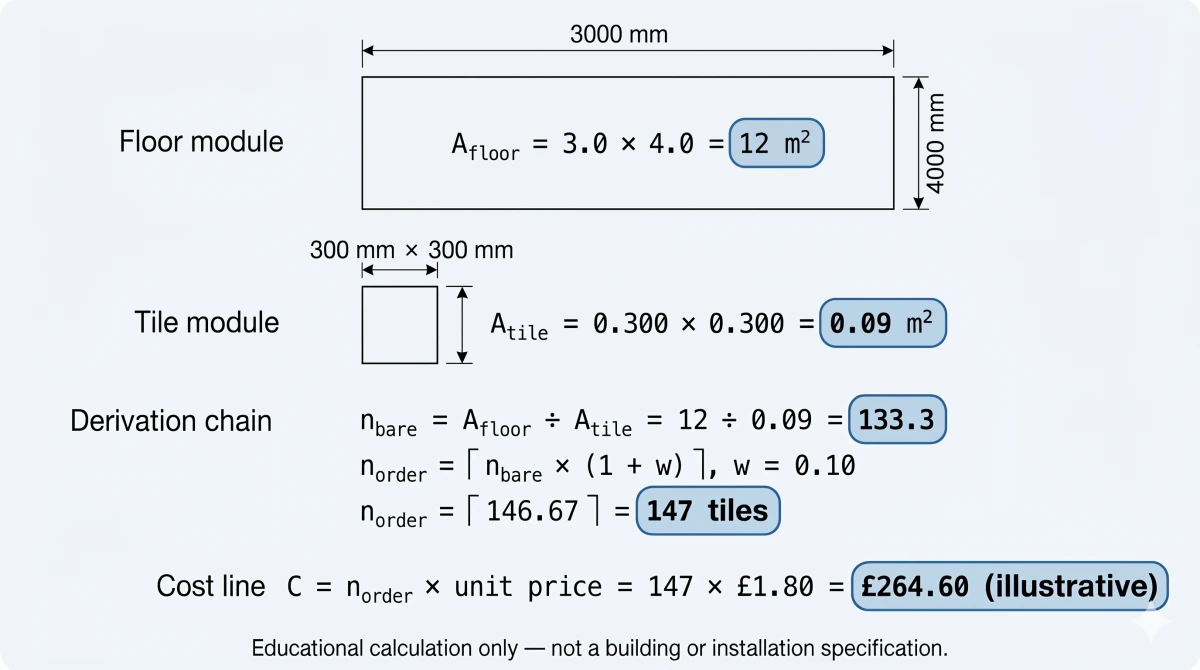
Typical UK bathroom wastage
Tiles run 10–15% wastage around baths, showers, and complex first-fix cuts. Whole boxes are typically ordered, since partial boxes are usually non-returnable. Our defaults reflect common UK trade allowances, and can be adjusted upwards for non-standard geometry or downwards where experience supports a lower figure.
What this tool does not do
It does not replace a professional quote, factor regional pricing, assess structural adequacy, or confirm Building Regulations compliance. Those remain the responsibility of a suitably qualified designer, surveyor, or your building control officer.
On-site considerations for bathroom tile
Wet rooms need tested falls, an impervious substrate, and the correct waste size. Flexing chipboard floors can crack tile grout within around 18 months; overboarding with cement-particle board before tiling is common practice.
Building Regulations and compliance
Bathrooms in new work are covered by Approved Documents G (sanitation), F (ventilation), and P (electrics). Zoned IP ratings for lighting near water are mandatory. When in doubt, a pre-application enquiry to the local authority can give early clarity, which tends to be less costly than retrospective correction.
Before you order
Sanitaryware and brassware are often ordered together, since tile layout depends on wall-hung pan and basin positions, not the other way around. Cross-checking the calculator’s output against a supplier quote helps catch differences in pricing assumptions — ask for exact product specifications (grade, finish, batch number) and confirm delivery timescales against your programme.
Adjusting the defaults
Every input in this calculator is editable. Enter your own dimensions, supplier prices, and wastage allowance — the output recalculates instantly. If the defaults feel off for your region or project type, your own numbers always override them.
Using this bathroom tile calculator alongside other BuildMetricLab tools
This calculator works best as part of a planning workflow. Pair the quantity with our project contingency, labour-hours, and material-cost calculators to build a complete estimate before you pick up the phone to a supplier. All BuildMetricLab tools run entirely in your browser — no sign-up, no data sent anywhere, and every formula is shown on-page so you can audit the maths.
Sources & methodology
Estimates how many tiles you need for a given floor or wall area. Every result is calculated from the values you enter, and all inputs are editable.
Frequently asked questions
Are bathroom tile calculator results accurate enough to order materials?
Use them as a starting estimate only. Verifying the final quantity with your supplier or contractor before ordering is good practice — site conditions, wastage and cut-offs all affect the true figure.
What wastage percentage should I use?
The calculator defaults to the typical UK trade allowance for bathroom tiling. Complex cuts, awkward shapes, and first-time DIY typically need a higher allowance; values below the default may underestimate offcuts. The default reflects common trade practice for straight-laid rectangular layouts.
Does this replace professional advice?
No. This tool is a planning estimator. For works that affect structure, Building Regulations, Party Wall, gas, electrics, drainage to a sewer, or similar, consult a suitably qualified professional.
Can I change the unit prices?
Yes — every price field is editable. Plug in your supplier's quote to get a total that matches your project.
Spotted something off?
Calculations or display — let us know.
Related tools
Calculators from other categories that planners often reach for next.